What Are RTP, eRTP, and SRP in Slots
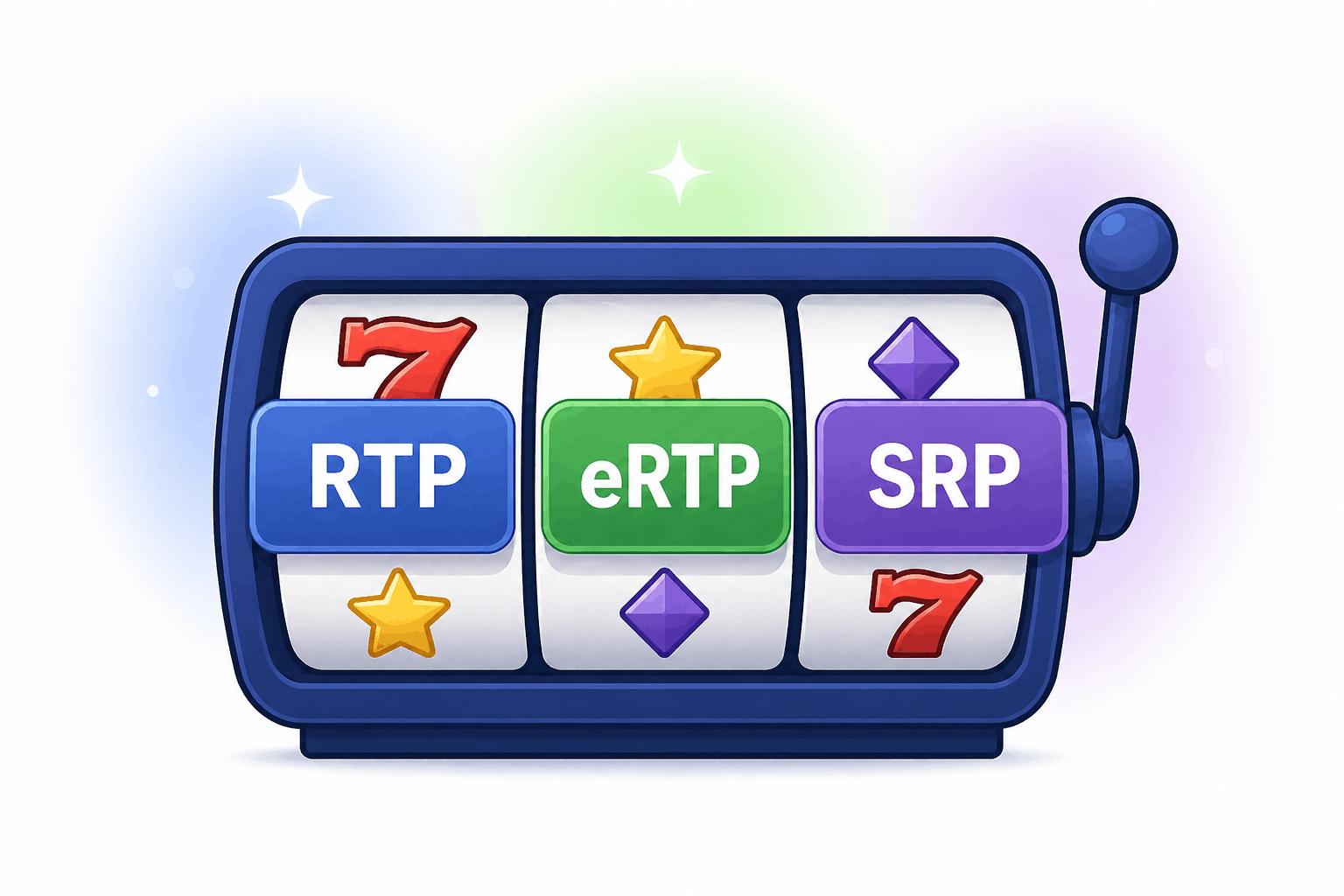
Not every player really gets what RTP (Return to Player, “return to player”) means in slot machines, let alone eRTP and SRP. Let’s break down how these metrics are calculated, how they affect gameplay, and why they matter at all.
RTP: Theoretical Return to Player
RTP (Return to Player) is the theoretical percentage of total bets that a slot is expected to pay back to players over a large statistical sample.
RTP became widely adopted in the industry during the 1990s and 2000s, along with the rise of online gambling. In the 2000s, as regulation developed (UKGC, MGA and others), RTP turned into an industry standard.
RTP is important for:
How RTP Is Calculated
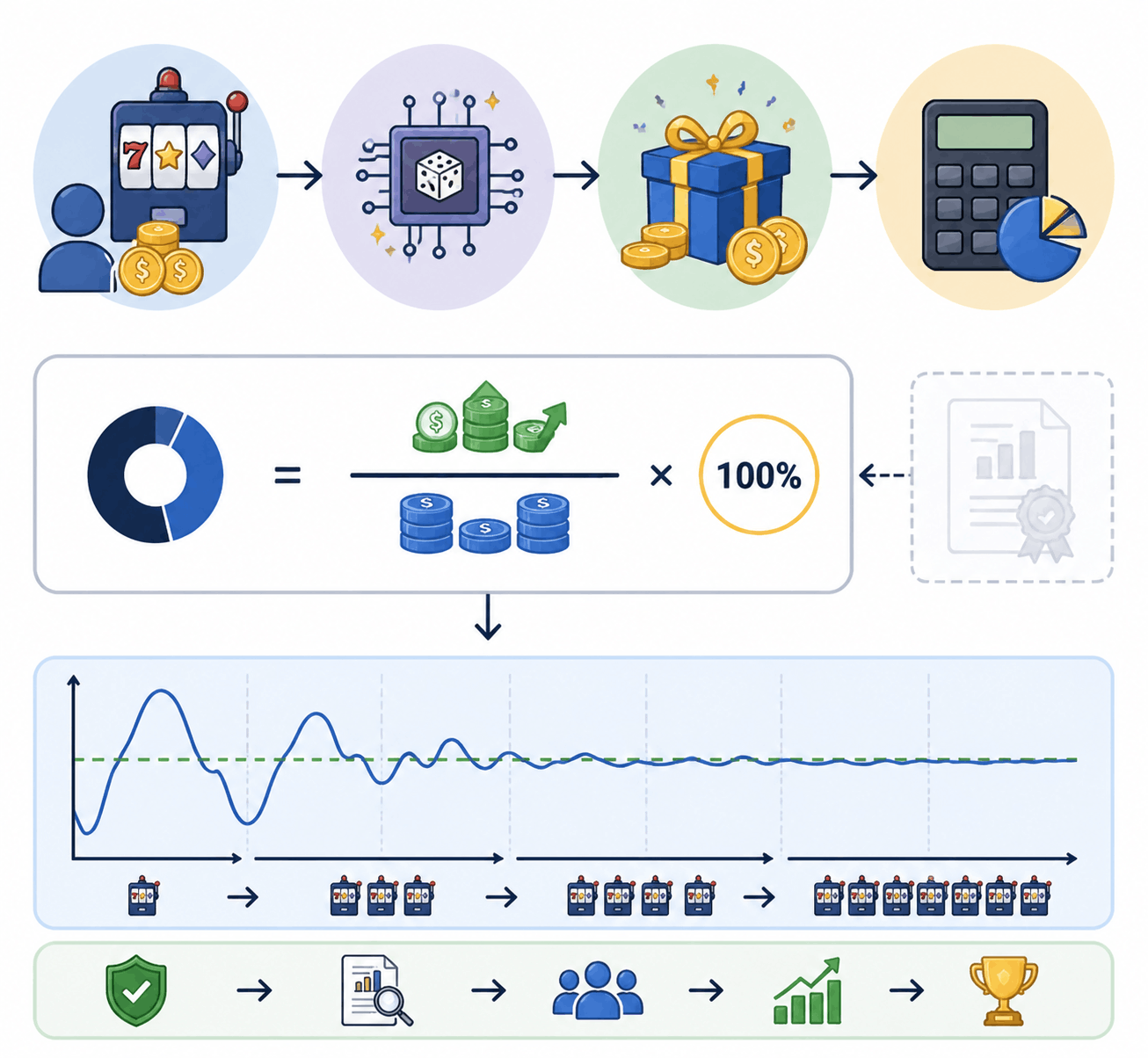
The basic RTP formula looks like this:
RTP = (Total amount paid out / Total amount wagered) × 100%.
In practice, RTP is not guessed but modeled in specialized simulators based on an RNG (random number generator). For each slot:
After these simulations, the results are sent to independent testing labs (eCOGRA, GLI, iTech Labs, BMM Testlabs, and others) for certification.
What Tools Do Providers and Labs Use?
Internal providers’ simulators. Inside studios (NetEnt, Microgaming, etc.), developers use their own simulators and mathematical models. A game designer sets the reel strips and paytable, runs a large number of simulated spins, checks the actual RTP, and fine‑tunes symbol weights until the result lands within the target range.
Testing/certification labs. Auditing labs such as eCOGRA, iTech Labs, BMM Testlabs, Gaming Laboratories International and others verify the RNG, the math model, and whether the stated RTP matches the simulation results.
Player‑side tracking tools. Services like SLOT STAT use real player sessions to estimate the actual payback, but this is user‑driven “player‑side” statistics, not the provider’s internal design data.
Can RTP Be Changed After a Slot Is Released?
In licensed online casinos the theoretical RTP of a slot cannot be freely adjusted “on the fly.” It is:
Nuances:
Many providers (for example, Pragmatic Play, NetEnt) release several versions of the same slot with different preset RTPs – say, 94%, 96%, and 98%.
When the casino operator integrates the game, it chooses one of these versions. Switching the RTP version later requires re‑integration or an update, and in many jurisdictions also additional approval from the regulator.
In land‑based casinos, some equipment may allow more flexible payout‑percentage settings on the operator side. In online environments, especially under UKGC, MGA and similar regulators, any operator‑side changes to RTP or the RNG without new certification are effectively prohibited, as this could lead directly to license revocation.
Who Certifies Slot RTP?
The main international testing laboratories are:
eCOGRA (eCommerce Online Gaming Regulation and Assurance) – a UK‑based lab focused on the European and UK markets, known for its “Safe & Fair” seal.
iTech Labs – an Australian lab with global reach, including Malta, Curacao and other jurisdictions.
GLI (Gaming Laboratories International) – a US‑based company, one of the benchmarks for the US and Latin American markets and the author of several technical standards for interactive games.
BMM Testlabs – an international lab with offices in the US and Australia, certifying many major providers, including Pragmatic Play.
Others include Gaming Associates, TST (Technical Systems Testing), NMi Gaming, and similar bodies.
These labs:
Simulate a huge number of spins;
Verify that the RNG works correctly;
Compare the actual payback against the declared RTP (for example, 96% ± a small tolerance band).
At the end, they issue a certificate that both the provider and licensed casinos can reference as proof of compliance.
How Can a Player Check the RTP of a Specific Slot?
Ordinary players usually don’t have direct access to full lab technical reports, but RTP can be checked indirectly:
If a casino hides RTP information, does not display licenses and lab logos, that is a red flag and a reason to avoid that platform.
eRTP: Effective Return with Bonuses
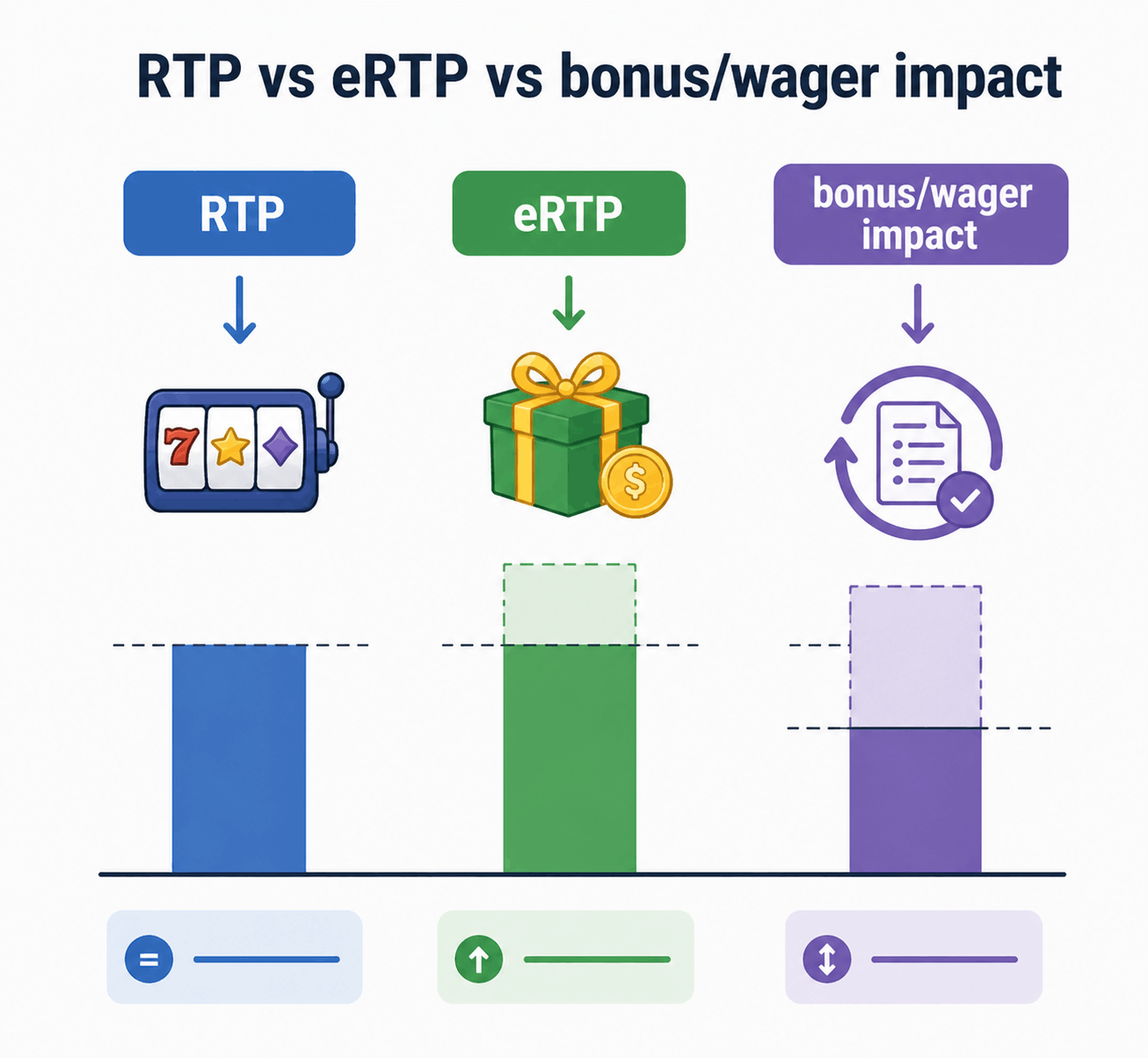
eRTP (Effective Return to Player) is the payback percentage calculated after taking into account bonuses, free spins, wagering requirements, and casino promotions. In practice, it is an adjusted RTP that reflects the real‑world return when playing under a specific operator’s conditions.
eRTP matters for:
Example: RTP 96% + a 100% deposit bonus with 35× wagering → eRTP can reach 97-98% if the bonus effectively adds extra value.
Nuances:
eRTP is not certified by testing labs like RTP; it is usually calculated by trackers or analysts based on promo terms.
In high‑volatility slots such as Gates of Olympus, eRTP can vary widely because of the difficulty in completing bonus wagering requirements.
SRP: Statistical Return Percentage
SRP (Statistical Return Percentage) is an analytical metric of actual payback, calculated from real player sessions collected by tracking tools and user‑side statistics. In practice, it shows the real‑world percentage the slot “returns” relative to the money wagered over a given time period, regardless of bet size.
The formula is similar to RTP:
SRP = (Total amount paid out / Total amount wagered) × 100%.
However:
SRP reflects phases of higher and lower slot performance and can meaningfully differ from the game’s theoretical RTP over short time frames.
Example Calculation: The Dog House
Suppose a slot has a stated RTP of 96.51%. Yet according to player‑side statistics from SLOT STAT (see screenshot below), the SRP over a given month might drop to around 90%. This means that, over that specific period, the actual payback for that player sample was noticeably lower than the theoretical RTP.
Provider Data
SLOT STAT Data
Multipliers Distribution
To see the daily dynamics, it is enough to check the The Dog House graph showing the slot’s daily SRP.
This chart clearly illustrates how the daily SRP fluctuates widely around the theoretical RTP over short intervals, especially in high‑volatility slots.
Who Introduced SRP and Why
The term SRP and the practice behind it did not come from regulators, but from analytics‑driven trackers and player communities. Its main goals are:
Important to note:
RTP is an official, regulatory metric, defined in game documentation and backed by certification.
SRP is an analytical indicator that depends on the player sample, the observation period, and the specific tracker’s methodology.
What Factors Affect SRP?
In the short and medium term, SRP is strongly influenced by:
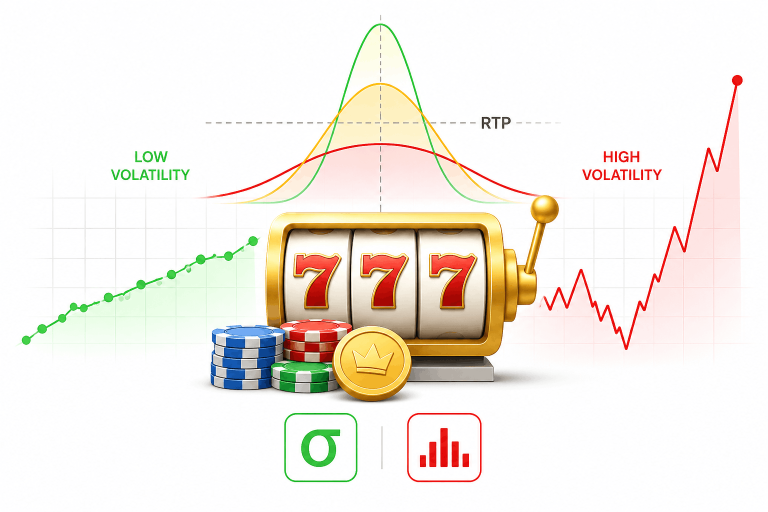
Slot volatility. High‑volatility games (like Gates of Olympus and similar titles) offer rare but big wins. As a result, their SRP can swing from roughly 60-70% in “cold” periods to 120-140% or more in “hot” phases over relatively short stretches.
Sample size (number of spins). A small number of spins (hundreds or a few thousand) leads to high variance: SRP can stray far from RTP. With tens of thousands or more spins, SRP gradually moves toward the theoretical value.
Random runs (hot/cold cycles). The RNG naturally creates streaks of lucky and unlucky spins. On these “waves,” SRP temporarily drifts above or below RTP.
Game mechanics. Rare high‑impact bonus rounds, multipliers, jackpots, and similar features increase dispersion and amplify SRP swings.
Players and analysts sometimes use SRP to pick slots where the actual return over the last 7-30 days has clearly exceeded the theoretical RTP (for example, SRP > RTP + 5%).
However, it is important to remember: this does not guarantee future performance; it simply describes what has already happened.
How Volatility Affects SRP Behavior
In simple terms, the impact of volatility on SRP can be described like this:
| Volatility | SRP Character | Typical Behavior |
| Low | Stable, with deviations around ±2-5% | Frequent small wins; SRP converges toward RTP relatively quickly |
| Medium | Moderate swings, roughly ±5-15% | Mixed sessions with noticeable but not extreme SRP “hills” |
| High | Strong fluctuations, ±20-50% or more | Rare but big hits; SRP can be very low or very high over short stretches |
Why this happens:
What’s the difference between RTP, eRTP, and SRP?
RTP, eRTP, and SRP are three ways to look at slot payout rates that every grinder needs to get straight.
RTP is the theoretical, fixed percentage baked in by the game maker and verified by a testing lab.
eRTP is the effective return rate, factoring in casino bonuses and promos that boost your real play.
SRP is the actual stats from real spins over a set period-it naturally swings up and down based on variance.
Quick Summary Table:
| Aspect | RTP (Return to Player) | eRTP (Effective RTP) | SRP (Statistical Return Percentage) |
|---|---|---|---|
| Type | Theoretical, set by the developer | Effective, including bonuses/promos | Empirical, based on real player sessions |
| Calculation | (Payouts / Bets) × 100% from simulations | RTP + bonuses – wagering requirements | (Total payouts / Total bets) × 100% from trackers |
| Source | Provider + auditing labs | Promo trackers/analytics | User tracking services |
| Distance | Massive statistical sample | Promo session | Hundreds to tens of thousands of spins |
| Volatility | Fixed post-release | Depends on casino terms | Fluctuates with sample size and period |
| Practical Meaning | Game’s “passport” on infinite distance | Real return with bonuses | Slot’s current form |
Quick Player Rundown
RTP is the official, theoretical payout percentage for a slot over a super long haul-set by the developer and certified by labs like eCOGRA, GLI, iTech Labs, etc., usually sitting at 94-98% for online slots.
eRTP (Effective RTP) factors in bonuses, free spins, and wagering terms to show the real profitability of a promo (typically eRTP = RTP + 1-3%, but it hinges on ×30-40 playthrough and slot volatility). Always check before depositing-if eRTP dips below 95%, the deal might not stack up mathematically.
SRP is the actual return percentage from real spins over a short window (day, week, month), crunched by independent trackers and communities using player data.
Key diffs: RTP stays rock-solid unless the game’s recertified, eRTP shifts with casino promos, and SRP bounces around due to variance and volatility.
Volatility angle: Low-vol slots see SRP hug RTP pretty quick; high-vol ones can swing wild on short runs and need tons of spins to even out.
In practice: Scope RTP in the slot info or on the provider’s site, eRTP via bonus calculators or promo T&Cs, and SRP on stats sites for 7-30 or 90-day stretches-treat it as past performance, not a crystal ball.
Heads up: This is info only-outcomes are random, and always double-check bonus rules at your casino.